


This question took us to the renowned Mittenwald School of Musical Instrument Making in February 2026 – a place that holds special meaning for me, as it is where I learned the craft of guitar making.
At the heart of the study were two carefully crafted acoustic guitars. Both were built from the same pieces of wood, with identical dimensions and construction wherever possible. The only difference: one featured my Comfortwave, a three-dimensionally shaped side designed to provide easier access to the higher frets without a traditional cutaway.
To find out whether this subtle change in geometry affects the sound, we brought both instruments into the school’s remarkable anechoic chamber. Surrounded by walls covered in deep sound-absorbing wedges, we entered a space where almost every reflection disappears – and where a guitar sounds quite unlike anything we are used to hearing.
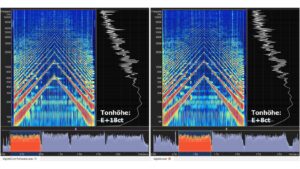
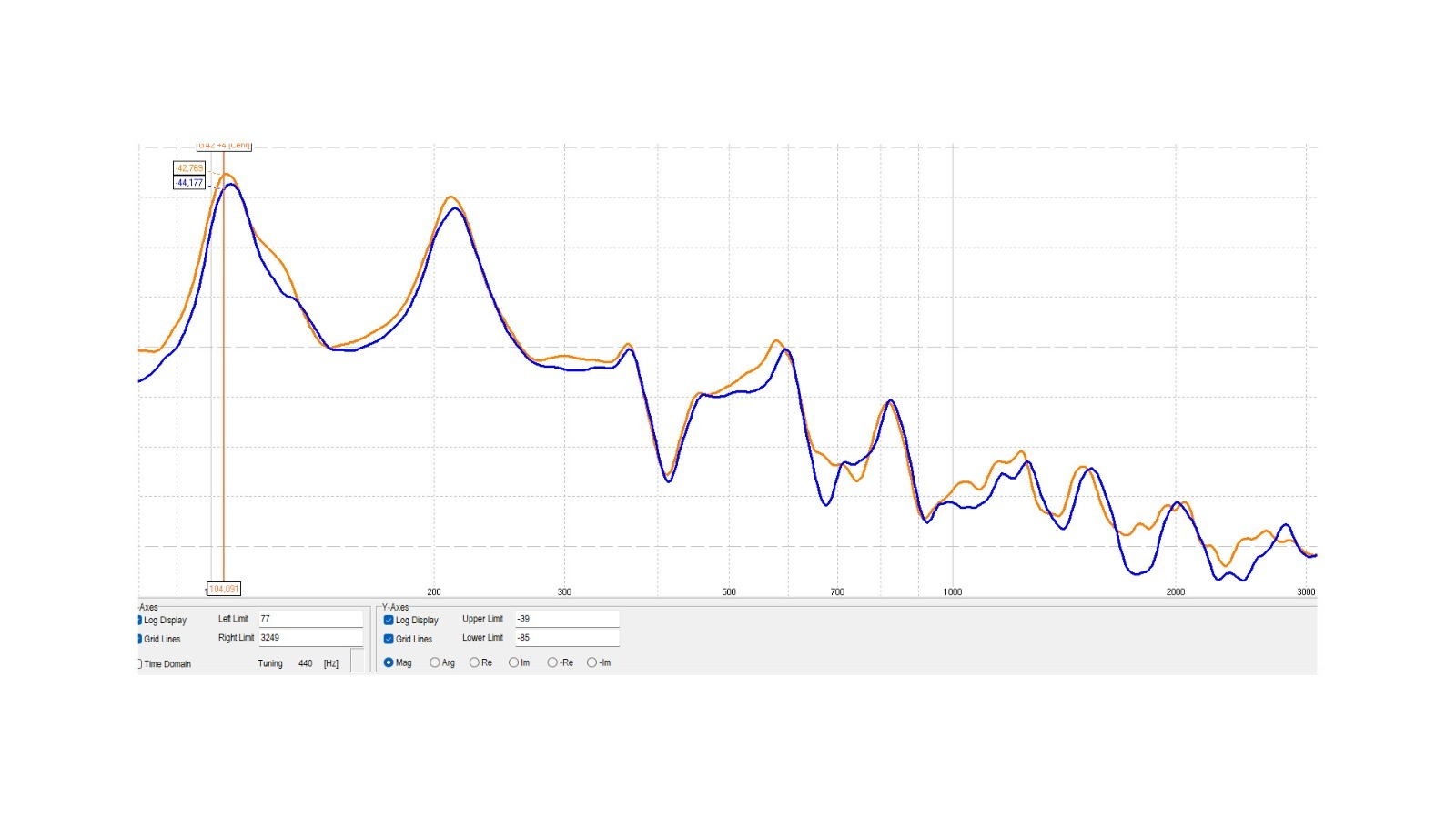
Using precise measurements, we compared the instruments’ main resonances and frequency responses. Then guitarist Manuel Randi brought both guitars to life, performing the same musical passages under carefully controlled conditions.
Finally, students and teachers at the school listened to the recordings in a blind listening test, without knowing which instrument featured the Comfortwave.
The result was as encouraging as it was important: Within the scope of our measurements and listening tests, no significant acoustic differences could be detected. Both instruments showed remarkably similar resonance characteristics, dynamics and tonal qualities.
For me, this was a meaningful confirmation of an idea that has guided the development of the Comfortwave from the beginning: greater playing comfort without a perceptible compromise in sound.
A heartfelt thank-you to the Mittenwald School of Musical Instrument Making, its teachers and students for their hospitality and participation; to Manuel Randi for his sensitive and precise musical contribution; to Helmuth Frisch of GuitarSoundDesign for his valuable support; and to FREIUNDZEIT for their creative work and collaboration.
It was a special day of learning, listening and discovery – and another important step in the ongoing evolution of Thom Orgler Guitars


